How to correct frequency deviation
2026-03-27
Crystal Oscillator Frequency Error & Fine-tuning Methods
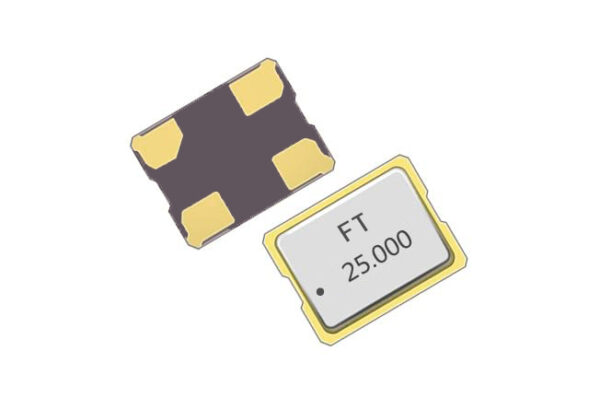
Crystal oscillator frequency error refers to the deviation between its actual output frequency and the nominal frequency, usually expressed in ppm (parts per million). This error is affected by multiple factors, including manufacturing tolerance, temperature variation, load capacitance matching, supply voltage fluctuation, aging, etc.
1 Common Types of Crystal Oscillator Frequency Errors
Frequency Tolerance
The allowable deviation of the crystal oscillator’s actual frequency from its nominal frequency at room temperature (typically 25℃). Common specifications are ±10ppm, ±20ppm or ±30ppm, while high-precision products can reach ±5ppm.
Temperature Frequency Stability
The maximum frequency offset relative to the reference temperature (25℃) within the specified operating temperature range. Examples:
- Commercial grade (-20℃ ~ +70℃): ±20ppm ~ ±50ppm
- Industrial grade (-40℃ ~ +85℃): ±10ppm ~ ±30ppm
- Military grade (-55℃ ~ +125℃): ±0.5ppm ~ ±5ppm
Aging Error
The crystal oscillator frequency drifts slowly over time, with an annual aging rate generally ranging from ±1ppm to ±5ppm.
2 Four Common Methods for Crystal Oscillator Frequency Fine-tuning
Capacitance Fine-tuning
A crystal oscillator usually forms an oscillation circuit with load capacitors; adjusting the capacitance changes the frequency.
- Principle: Frequency is inversely proportional to load capacitance — larger capacitance lowers frequency, smaller capacitance raises frequency.
- Operation: Replace the load capacitors in parallel with the crystal oscillator. For example, if a 20pF capacitor causes low frequency, switch to 18pF to increase the frequency.
Voltage Control Method (VCXO)
Adjust the output frequency of a voltage-controlled crystal oscillator using an external voltage.
- Principle: The frequency response range of a VCXO is directly determined by the control voltage variation.
- Operation: Integrate a voltage regulation module (e.g., potentiometer or DAC) in the circuit to tune the frequency precisely by changing the input voltage to the VCXO.
Software Compensation Method
Applicable to systems with digital processing chips, correcting crystal oscillator errors via algorithms.
- Principle: Compare the crystal oscillator signal with a high-precision reference signal, calculate the frequency deviation, and apply dynamic compensation.
- Operation: Program compensation logic in a microcontroller or FPGA to adjust clock division ratios or frequency calibration register parameters.
Temperature Compensation Method (TCXO)
A built-in compensation solution for temperature-induced frequency drift.
- Principle: A temperature sensor monitors ambient temperature in real time and adjusts the crystal oscillator output based on a preset compensation curve.
- Operation: Calibrate the crystal oscillator’s temperature-frequency characteristics before TCXO delivery, and store the parameters in the compensation circuit for automatic correction.

Meet in Moscow | 2026 Expo Electronica Russia
Understanding the Functions of Crystal Oscillator Pads