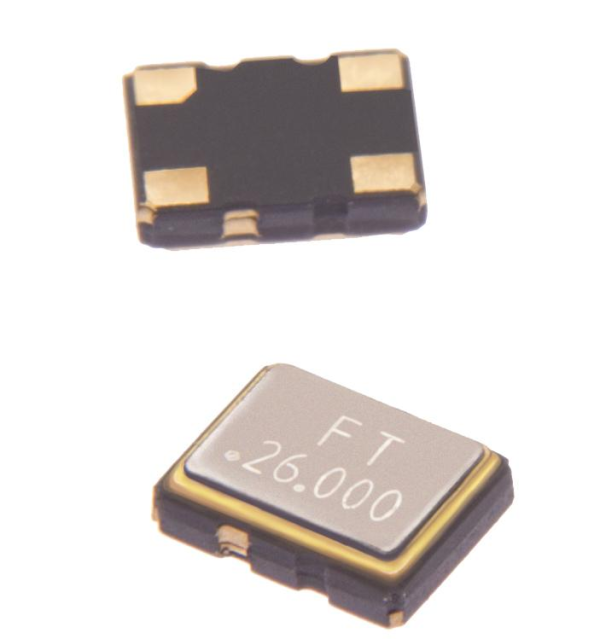
Crystal Oscillators Support Perfect Rendering on AI Glasses
2026-06-27
AI Glasses (Artificial Intelligence Glasses), also known as artificial intelligence eyewear, are smart wearable devices integrated with artificial intelligence technologies. In 2024, as large AI language models gradually matured, a range of consumer-facing AI glasses products that prioritize lightweight design and practicality over excessive functions began to gain mainstream attention. The AI glasses market saw an explosive boom in 2025.
As AI glasses technologies continue to penetrate the consumer market, competition within the eyewear segment has intensified sharply. Numerous domestic and international brands have launched a diverse lineup of AI glasses products, including camera glasses, AR glasses and audio glasses, with a complete industrial chain taking shape rapidly. Among all these smart wearable terminals, crystal oscillators play an irreplaceable role.
Crystal oscillators serve as the "invisible heartbeat" of AI glasses by supplying precise clock references. Though they do not participate in intelligent computing, they directly govern the synchronous stability and power consumption performance of display, voice, sensor and communication functions.
Why do smart glasses require stable clock signals?
AI glasses are far more than simple display hardware; they contain an integrated system consisting of cameras, microphones, sensors and processing chips:
- Camera synchronization: Shutter control operates at the millisecond level. Poor stability and low precision of crystal oscillators may cause desynchronized footage across multiple cameras, accompanied by lagging or jittering images.
- Wireless communication: Bluetooth and Wi-Fi impose stringent stability requirements on crystal oscillators. Even minor frequency fluctuations can trigger audio-video desync or transmission disconnections.
- Microphone arrays: Beamforming and noise reduction rely on reference clock signals; inadequate clock performance will degrade speech recognition accuracy.
- Processing chip computation: High-speed arithmetic operations have very low tolerance for clock drift.
In short: Unstable clock signals lead to stuttering, connection drops and signal distortion in AI glasses.
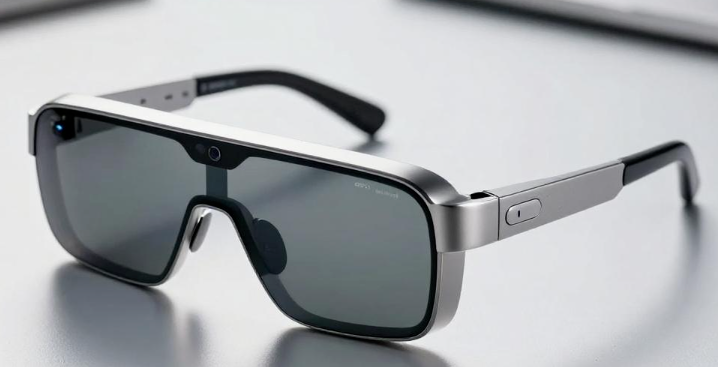
Core Functions of Crystal Oscillators in AI Glasses
Crystal oscillators deliver stable frequency signals to core components of AI glasses, including main control chips (AI processors), cameras, gyroscopes/accelerometers (for SLAM positioning), Bluetooth/Wi-Fi modules and RTC (real-time clock) circuits, enabling millisecond-level coordination among multiple modules.A single pair of AI glasses generally requires 5 to 8 crystal oscillators (compared with only 1 to 2 oscillators for conventional wearables), covering low-power 32.768kHz clock crystals as well as high-frequency, high-stability oscillators at 24MHz, 40MHz, 76.8MHz and other frequencies.
Applications of Thermistor-Compensated Crystal Oscillators
Key Parameters of TCXO